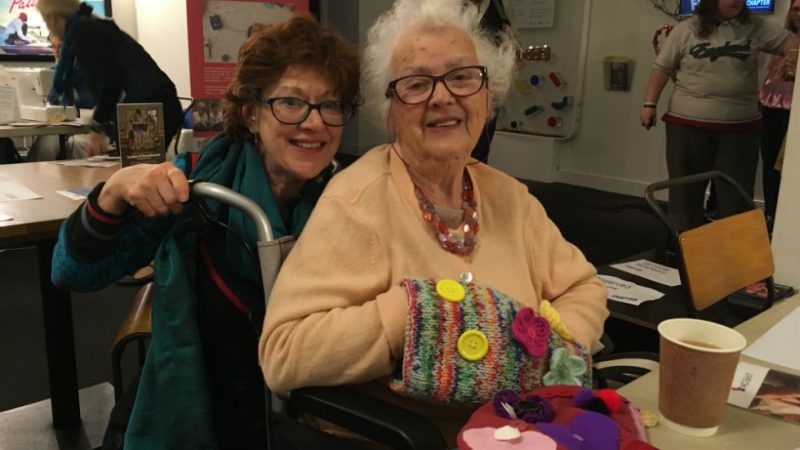
Dementia Friendly Screenings Review 2017 (Cecilia McAleavey)
Cecilia McAleavey, 61, Radyr, Cardiff explains why dementia-friendly screenings are so important for her mother.
Cinemas across the UK recognised World Alzheimer’s Month, with dementia friendly cinema events throughout September 2017 and beyond.The movement was led by Film Hub Wales with film screenings supported by the eight BFI Film Audience Network (FAN) Hubs across the UK, who provide dementia-friendly guidance, training and support to cinema operators.
On September 22, 2017, Chapter Arts Centre Cardiff, organised a day of film, information sessions, awareness raising and more to celebrate World Alzheimer’s Month, which included a dementia-friendly screening of ‘The Sound of Music’, with warm up by Goldies choir and an interval with tea and biscuits.
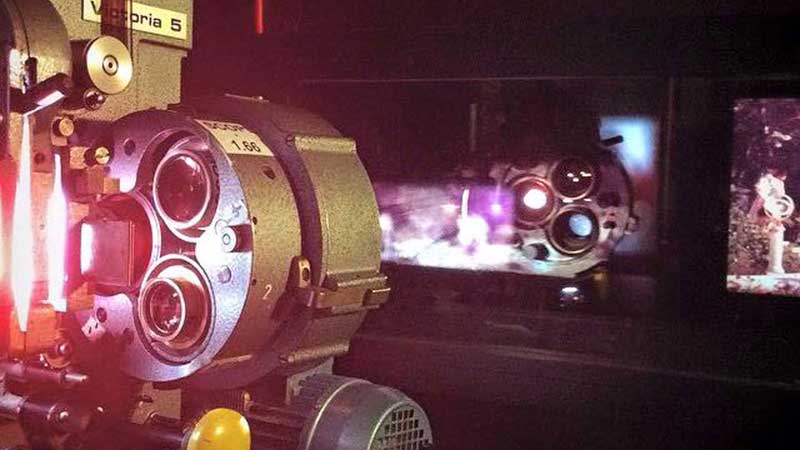
Cultural Cinema Exhibition 2017 (Off Y Grid)
Silvia Sheenan, Off Y Grid’s Coordinator (to 2017) attended the ICO Cultural Cinema Exhibition course in 2017. Here’s how she got on:
The course was an widespread overview of cinema exhibition, consisting of several different sessions covering topics such as distribution, exhibition, commercial programming, curatorial, marketing, programming for your audience, finding audiences, festivals, diversity and much more.
I learnt that there are several things worth keeping in mind when promoting titles in the future. Creating partnerships with media outlets is important, this can include freelance journalists, and even local businesses and community groups. This is especially relevant in North Wales due to a spread out population so it makes sense to join forces in the local area.
Market research is important. Explore the venue with customers eyes to understand the customer journey, demographics, programme, physical space, ease of booking – being honest about what can be done immediately, in the future, or not at all.
There are nuances to targeting to audiences. Striking the balance of providing specific, strand-based content, whilst also growing audiences and encouraging more diverse or ‘risky’ viewings.
When considering programming you can use archive and AMI films to complement and diversify existing programme, being creative, providing context, blending with the curatorial.
Silvia’s Top Four Elements of the Course
2. Finding themes and connections as a way to introduce new films to your audience, prioritise cultural diversity.
3. Being subjective and personal can be a way to ‘defend’ specialist choices- this could help with OYG screenings- perhaps having ambassadors or individual voices to champion certain features (relates to the importance of recommendations).
4. Using surveys, print and email, making sure questions are relevant, offering refreshments as incentives, sharing information and demonstrating how you’ve implemented it.
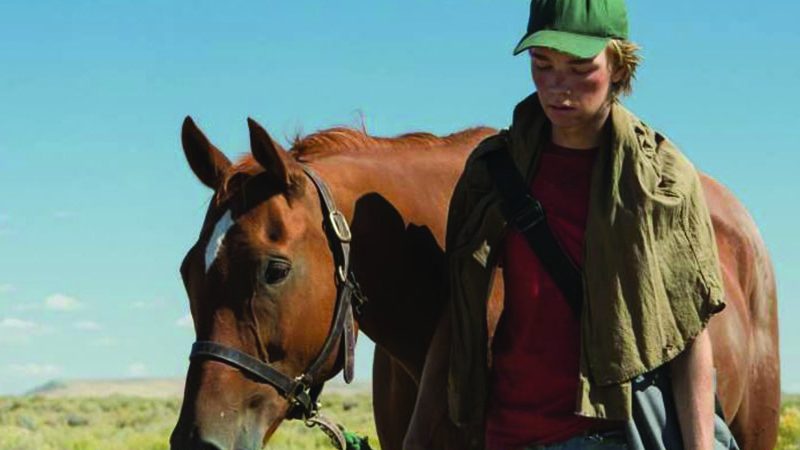
ICO Screening Day 2017 (Magic Lantern)
Sara Waddington attended the Dyddiau Dangosiadau ICO on behalf of The Magic Lantern Cinema in November 2017, read about her experience below.
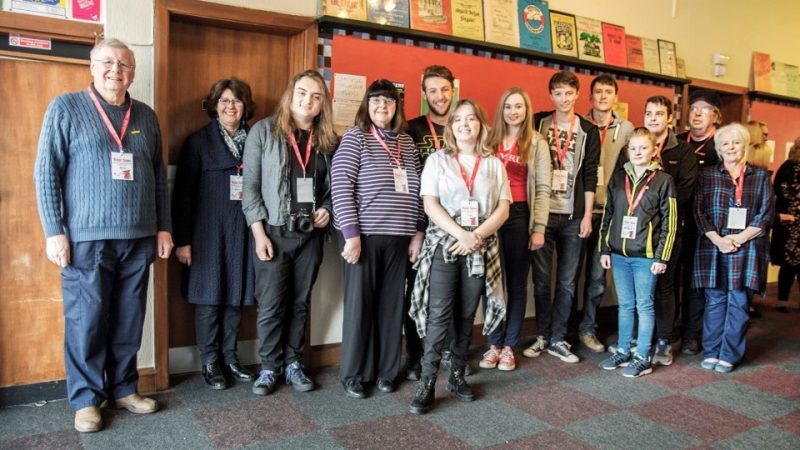
Wicked Cinema at Rhyl Little Theatre 2017 (Rhiannon Wyn Hughes)
Rhiannon Wyn Hughes from Wicked 17 International Youth Film Festival explains how they got cinema running at Rhyl Little Theatre for the first time in over 50 years with a weekend of Sci-Fi classics.
The monthly cinema has become a permanent fixture in the Rhyl calendar.
“When we started programming films for the Festival last year, we found it difficult and limiting working with full-time cinemas. They were expensive to hire, but even more importantly the windows of opportunities to screen extra films around their regular programming was limiting. This was unresponsive to our festival’s needs. We also needed to hire the equipment from South Wales.
Then we got in contact with The Little Theatre, which offered an affordable and flexible venue. They were also keen to see films screened again after a gap of over 50 years.”

Destination Unknown 2017 (Pontio)
On 21ain June 2017, Pontio hosted a Q&A with Welsh producer Llion Roberts on his new critically acclaimed feature documentary Destination Unknown, a collection of powerful interviews with the last Holocaust survivors. This is the first in a season of season of Welsh films this year at Pontio, supported by our Gwnaethpwyd yng Nghymru strategy. Here, Pontio’s Cinema Co-ordinator Emyr Glyn Williams talks about the screening:
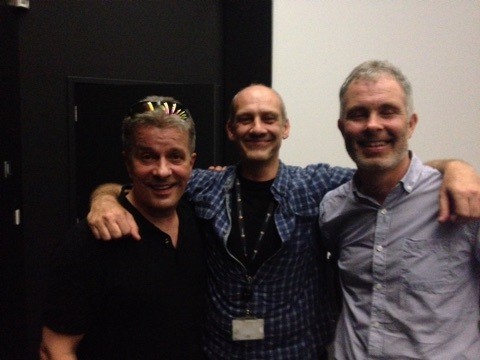 “As a programmer, it is always exciting to hear about Welsh filmmakers with a film ready for screening. Initially this was the reason to investigate Destination Unknown as the film’s producer and main creative force, Llion Roberts, is based locally.
Pretty soon it became clear that this was no ordinary film, and Llion was no ordinary film maker. You could say that Destination Unknown is a labour of love as Llion’s background is more rooted in satellite technology and equipment hire services than traditional film production. However, that would give you the wrong impression of what the finished film actually is. It took Llion 15 years to make this film and I have no hesitation in calling him a film artist on the strength of this production.
Another strong reason to screen the film was the unique ability cinema has in successfully transmitting certain stories and histories to the audience. At times, this film is overwhelmingly harrowing and something that a normal television screening could never contain. Some human stories need to be communicated communally in a shared space; in a space of togetherness and stories from the Holocaust are such stories. In fact, I would actively encourage other cinemas in Wales to book this film for this precise reason – its natural home is in the cinema.”

Technical Skills for BAMER Women 2017 (Gentle/Radical)
In September 2017 Rabab Ghazoul, the director ofGentle/Radical organised technical training for BAME women via the ICO Technical Skills for Digital Exhibition, led by Faye Chamberlain of Chapter Arts Centre.
Rural Community Cinema Event (2017)
Eiko Meredith from Kotatsu Animation Festival and Allison Williams from Dragon Theatre, Barmouth share their experiences of the annual Film Hub Wales Rural and Community Cinema event:
Eiko Meredith:
“This was my second time attending and I really enjoyed it. Kotatsu festival is bit different from the community cinema, still there are lots of things I learned from the event and meeting new people. Always great to see people who love films, so passionate about hosting the screenings! I have to start watching more films!!
All speakers are great, I really found Toby and Neil from Moviola were great. They explained really well about lots of things such rights, how to track films which we tend to have a problem with.
It is very interesting to hear how hard it is to host a successful screening for children, family. As a mother of two, I would like to point out if people are used to coming to a community centre, I am sure these film screenings can be more successful:
- Does your community centre host playgroup for children?
- Can you do some other family events to make people come to the venue?
- What about second child get little bit of discount for the ticket? Or stamp card, say every time you go to the screening and collect one stamp, if you get 10 stamps one free screening?
- What about the kettle and hot water for the bottle for the baby?
- Can you offer nice breast feeding area for women to feed during the film so nobody is staring at you?
- Any cushions or soft mat for some tired children and baby to lie down and watch?
Just little bit extra, it doesn’t have to be expensive and can bring more people to the screening, and they might come back again in the future.
Allison Williams:
“This is the second time I have attended the Rural Community Cinema Conference in the wonderful setting of Hay on Wye in Richard Booth’s envy-inducing Bookshop Cinema. The event provides a great opportunity to network with other venues and societies – always fascinating to hear their stories of what films have worked for them and share the important issues, such as how much to charge for a glass of wine!
At this year’s conference it was especially interesting to hear about the Into Film project and to meet the Young Programmers – really inspiring in terms of how it will help us move towards encouraging more young people to be involved with the Dragon Theatre, as audience and event promoters.
During the event I spoke a few words to the conference about the Cinegi Arts & Film project, explaining how we had piloted a few events and were looking forward to running more in the future. Some other groups had shown Cinegi titles and others were about to, so it was good to share experiences.”
I always come away from these events buzzing with ideas.

Working With Young Programmers lab 2016 (Rhiannon Wyn Hughes)
Rhiannon Wyn Hughes, attended the Film Hub Scotland’s Working with Young Programmers in November 2016 – read about her experience below.
“The one-day event, organised by Film Hub Scotland, featured introductions by Nicola Kettlewood (venue representative) and Carolyn Mills from Film Hub Scotland, which was a motivating start to the day. This was followed by the first case study – Discovery Film Festival, with a talk from Mike Tait and Discovery Young ambassadors. The second case study was Cutting East Film Festival. These were two interesting case studies. I got useful information from Mike Tait explaining the 12 month plan for his ambassadors and it was good to hear from the enthusiastic ambassadors themselves. We then had a presentation from YP Initiatives Hannah Higginson from Watershed, which dealt more with the statistics of the venue.
Matt Beere from Chapter got us all up and working with an interactive workshop, which went down well. It was also Useful opportunity to chat to other team members as well. Douglas Greenwood from Edinburgh FF and Jonathan Caicedo-Galindo from Cutting East FF gave a talk on ‘Progression for Young Film Makers’. Finally Dan Thomas, co-ordinator for the YP Network gave an honest and useful view of the challenges setting up Young Programmers Groups and sustaining them.”

Flatpack Birmingham 2016 (Young Vloggers)
In 2016 Film Hub Wales sent Amy, Luan and Eben; three young film and media enthusiasts, to Flatpack Festival, where they learnt how to create video blogs. Their previous experience included participation in the Zoom youth jury and BFI film academy in Wales but for most, it was their first film festival experience.
Young people (aged 16 – 24) were invited to Flatpack, to expand their film horizons, develop their networks and pick up practical skills from seasoned YouTubers and film professionals.
Participants explored and discovered a diverse range of events through Flatpack Film Festival and produced their own festival vlog as part of a unique two day workshop on Sat 23rd and Sun 24th April 2016 in Birmingham. Here they are talking about their experiences in their own vlogs!

Nordic Youth Film Festival NUFF 2016 (Rhiannon Wyn Hughes)
Rhiannon Wyn Hughes attended the Nordic Youth Film Festival NUFF on behalf of Wicked Wales in June 2016. Read about her visit/experience below.
“We were enthusiastically welcomed by the festival organisers who seemed genuinely pleased to welcome their first visitors from Wales. In the weeks before, when the visit had been confirmed, Dan Thomas (Wicked programmer) was invited to become a member of their international jury, along with jury members from Palestine and Norway. This role gave the visit and our festival a higher profile and enabled Dan to spend time with festival organisers and other international visitors. The visit helped to develop the relationship and build trust between our two festivals, which will be important when looking at future projects together.”
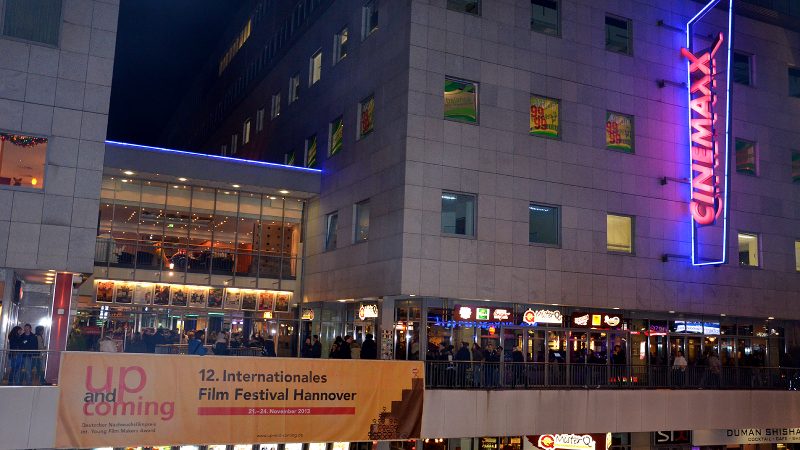
Up and Coming Festival, Hannover 2016 (Dan Thomas, Young Programmers Network)
Dan Thomas led the Young Programmers Network, supporting young programmer groups in venues across the UK. As part of setting up the Network, Dan successfully applied for a bursary from Film Hub Wales to attend the Youth Cinema Network at the Up and Coming Festival, Hannover. Here is what he gained from the trip:
Back in the Summer, Film Hub Wales commissioned me to do some research into youth film festivals. You may, or may not know, that we have a number of them here in Wales (Zoom, Pics, Ffilmic to name but three) and there are many more around the UK. Although Youth Festival provision is something that’s grown over the last 10 years here, festivals such as Cinemagic in Belfast have been running considerably longer.
Over in Europe however they’ve been running youth film festivals for decades. Zlin in the Czech Republic for example will be in its 56ed year in 2016. There are a plethora of festivals across Europe (it’s taking some time to map them all!) and they all vary in scope, size and ambition. In terms of USP they can be split into two distinct categories. Some festivals screen features from all over the world made specifically for young people. Others celebrate the films made by young people, and there are a lot of them.
I recently visited the Up and Coming Festival in Hannover, which fits into the latter category. Now in its 13ed year this international festival has more than 3000 entries from 57 countries. Out of that they chose 81 films from 33 countries for their international competition program.
I wasn’t just there for the festival however. A committed and passionate group of festival managers from all over Europe have formed a network to not only promote the work they do, but more importantly to promote and advocate the work of young filmmakers. The Youth Cinema Network (YCN) comes together across the year to share their festivals and ideas, and generally support each other in their collective aims and objectives.
I spent two days with the YCN in Hannover interviewing some of the members about their festivals and the sorts of challenges and barriers they face. What struck me was that they are the same challenges and barriers no matter where in Europe they were from – Croatia, Slovenia, Norway – all were incredibly tireless in what they do yet are battling constantly against the lack of funding and support. They also struggle to attract the typical cinema and festival audience which suggests there is a perception around films made by young people that perhaps they are not of sufficient quality to go and watch. It couldn’t be more different.
But the show must go on and they do what they do on limited resources because they recognise the value and the opportunities these types of festivals give to young people. Most of the festival directors have other jobs to make a living. Sanja, who runs Four Rivers Festival in Croatia, sells yoghurt and her colleague Lea works in a shoe store. They have to take vacations to develop and run their programme. Yet without Four Rivers where would the numerous great films made by 14-20 year olds, the diverse workshops, the round tables, field-trips, and music concerts for youth actually happen in Croatia? It’s about giving young people a voice and a chance to work in an industry they clearly enjoy. Many of the festivals cited examples of young people they’ve worked with who’ve gone on to make features.
At the YCN meeting I attended we discussed some pretty terrific ideas about how to raise the profile of the work of young filmmakers around the world. We need to smash through the negative perception that says films made by young people aren’t worth our time. We go to youth choir concerts and we watch Young Musician of the Year competitions, so why not celebrate young filmmakers?
I think most of the ideas will happen simply because there is a will and a collective desire around that table to advocate and work on behalf of those they work with. The good news for Wales is a new festival is currently being developed in Prestatyn. Wicked:16 has been born out of the YCN and will offer young filmmakers in Wales and further afield the chance to come together and show their films. After all, if we can’t support young talent, how does the film industry survive?